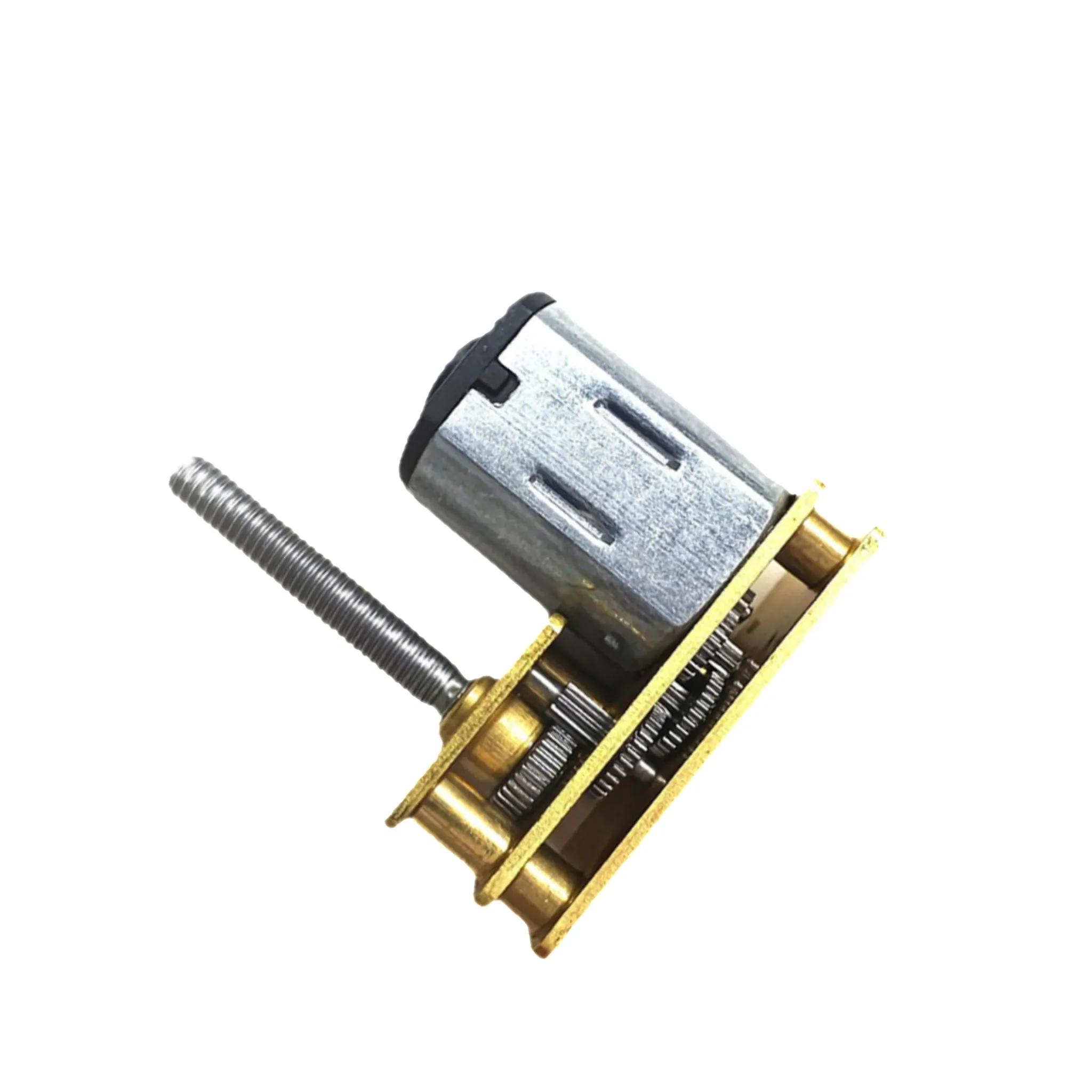
system compatible micro planetary geared electric industrial drives?
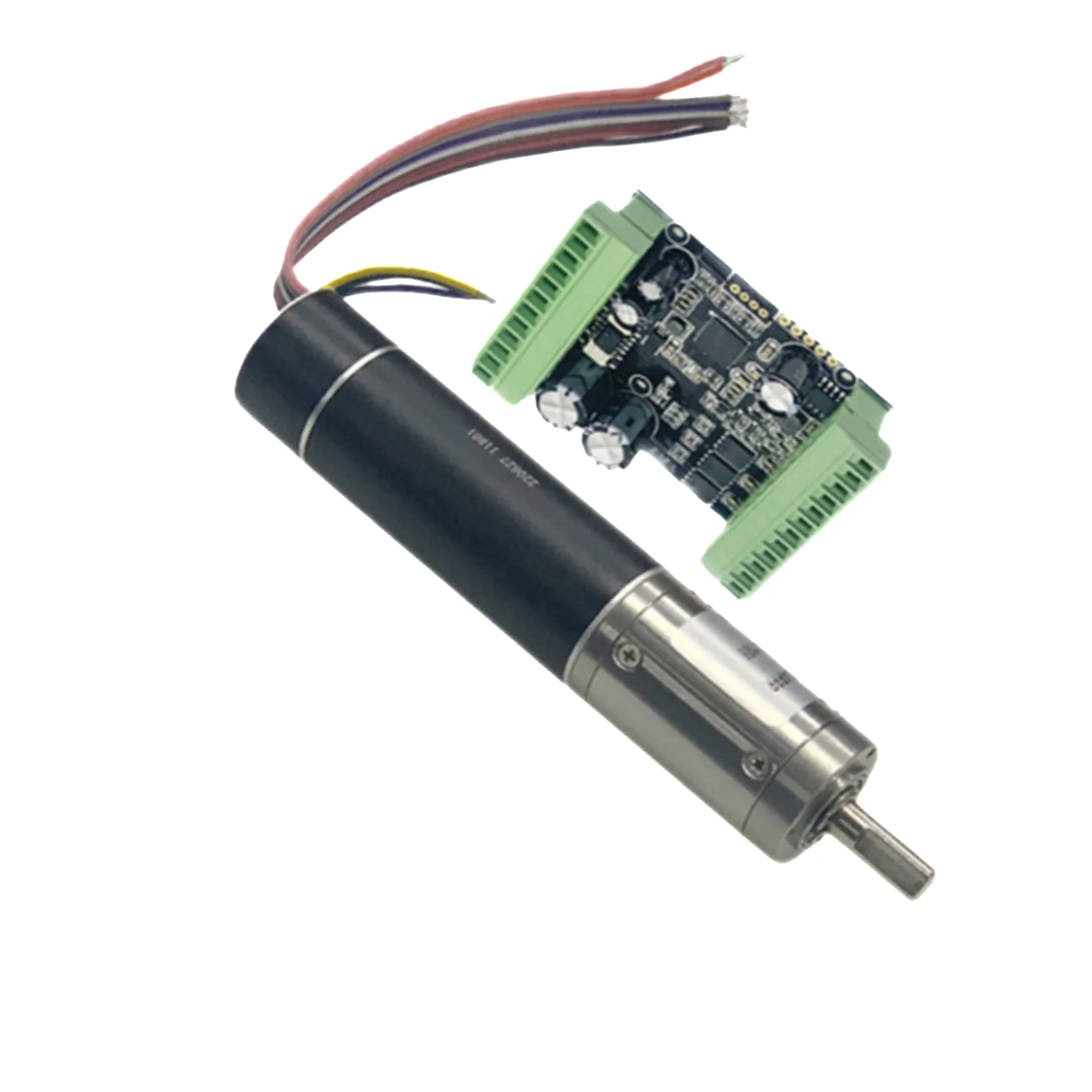
Helloto a complete survey about digital commutated motors featuring its mechanical use cases. 12V DC Gear Motor
electronically commutated motors yield a effective replacement to classic conventional electric motors in wide-ranging situations. These machines apply dynamic magnetic components and controlled electronic drivers to create rotational turning force. This prevents the imperative for contact brushes, resulting in amplified performance, diminished maintenance efforts, and elongated useful lives.
- Furthermore, brushless DC motors demonstrate tranquil operation, compact size, and excellent torque-to-weight ratio.
- Hence, they are used for a wide assortment of applications, such as
High-Accuracy Micro Gear Motors
Micro-scale gear motors furnish distinguished guidance throughout numerous implementations. These compact motors leverage elaborate transmission gears to yield exact movement with significant strength. Their superior thoroughness renders them perfect for branches such as robotics, medical devices, and aviation.
- Gear-driven micro motors present exact adjustment and calm operation.
- Multipurpose architecture extends customization to match targeted application needs.
- Owing to enhanced methods, micro gear motors are becoming more cost-effective.
Compact Stepper Motor Use in Mechatronics
Miniature stepping engines furnish reliable and compact-sized solutions for meticulous motion control around several different robotics and automation uses. These particularly efficient motors engage magnetic fields to cause rotational movement with gradual incremental steps, rendering them appropriate for activities requiring correct positioning.
- Deployments for mini stepper motors range robotized operations to consumer electronics and biomedical tools.
- Minimal bulk support integration into compact environments, while their significant torque density supports dependable performance.
- Moreover, mini stepper motors feature low noise operation and minimal oscillation, making them tailored for purposes where noise reduction is critical.
Choosing 12 Volt DC Gear Motor
When electing a 12V DC gear motor for your project, there are various aspects to review. To start with, determine the needed torque and speed. This depends on the weight that the motor will be managing. Next, consider the reduction ratio of the gear apparatus. A higher reduction ratio improves torque accompanied by speed drop.
Also, factor in the motor's efficiency and thermal range. Furthermore, the motor's physical size should be suitable for your development.
Lastly, it's key to find a reliable manufacturer and ensure that the motor meets regulatory norms.
Insight into Brushless DC Motor Action
A brushless DC motor behaves like a type of electric motor that takes advantage of stationary magnets to circle a shaft. Unlike brushed motors, these motors remove the bushings required for electric conduction. This construction delivers several benefits, such as higher productivity, reduced maintenance, and a calmer operation.
Process of a brushless DC motor relies upon the interaction between the armature magnets and a series of copper coils. These electromagnetic loops are arranged in a specific configuration to create force vectors that interact with the rotor magnets. This interaction creates spin force that causes the shaft to rotate.
To regulate the motor's revolving rate and path, a electronic driver generates varying pulses of current to the stator coils. The order of these pulses determines the magnetic field orientation in the stator, which in turn affects the rotor's position and spin.
High-Quality Micro Gear Drives for Industrial Use
In current industrial applications, precision and output are critical. Engineers aim for cutting-edge systems to improve their workflows and achieve high performance. Micro gear motors have grown to be a key piece in this undertaking, delivering compact yet dynamic gear units for broad applications.
Top-class micro gear motors grant exceptional torque density, permitting them to offer robust power within a compact footprint. These motors are designed with resilient materials and leading-edge designs to stand up to stringent operating conditions and ensure consistent performance for prolonged durations.
- Innovative gear systems decreases friction and wear, improving efficiency and lengthening motor life.
- Accurate control mechanisms grant refinement of speed and torque, fulfilling numerous industrial specifications.
- Combined encoders supply accurate position feedback, optimizing system stability and correctness.
From automation and robotics to medical devices and consumer electronics, leading micro gear systems are transforming industries by enabling compact, powerful, and precise drive devices.
Miniature Stepper Control Circuits and Uses
Stepping motors deliver precise positional regulation in many applications. Miniature stepper motor driver circuits are vital for manipulating these tiny motors. These circuits commonly harness integrated modules specifically designed for driving stepper motors, delivering capabilities like current management, direction switching, and speed regulation.
Deployments for miniature stepper motor driver circuits are broad, spanning fields such as robotics, manufacturing, consumer instruments, and medical apparatus. They can be found in areas like precision fine-tuning of position, component manipulation, regulated environments, and interactive controls.
Benefits of Twelve Volt DC Gear Motors
12V DC gear motors deliver a wide range of advantages for multiple applications. Their reduced size makes them advantageous for limited spaces, while their high torque output enables them to carry heavy loads with ease. 12V DC gear motors are also known for their capability, cutting down energy and managing quietly. They offer accurate control, making them suitable for tasks requiring fine movements. Furthermore, these motors are durable, able to withstand intensive conditions and provide consistent performance over time.
Efficiency and Power Density of Brushless DC Motors
Brushless DC (BLDC) motors are known for their exceptional functionality, consistently outperforming their brushed competitors. This superior efficiency proceeds from the absence of friction-causing brushes, leading to energy dissipation. Moreover, BLDC motors boast a remarkable compactness, enabling them to yield substantial power within a relatively small space. This fusion of advanced productivity and power density makes BLDC motors perfect for a wide array of applications, covering electric vehicles, robotics, drones, and consumer electronics.
- Core aspects shaping BLDC motor efficiency include coil structure, magnet types used, control algorithm employed, and operational environment.
- Increasing power density in BLDC motors usually involves using robust magnetic compounds, optimizing electromagnetic coil arrangements, and employing innovative fabrication techniques.
Frequent breakthroughs in BLDC motor technology keep to push the boundaries of efficiency and power density, making them an escalating popular choice for multiple industries.
Investigating Micro Gear Motors, Steppers, and DC Drives
Identifying the right motor involves understanding the unique traits of each type. Micro gear motors, stepper motors, and DC gear motors all provide wide-ranging advantages and pitfalls. Micro gear motors are recognized for their condensed dimensions, making them optimal for limited spaces. Stepper motors feature precise motion accuracy, making them beneficial for applications requiring spot-on steps. DC gear motors furnish a balance of power and output.
- Assess the torque requirements of your application.
- Estimate the required speed and positional control.
- Account for the context.
By diligently assessing these aspects, you can choose the motor that best accommodates your distinct expectations.
Including Brushless DC Motors in Designs
Brushless DC motors furnish exceptional effectiveness and robustness, making them a popular choice for a vast range of applications. Including these motors into your projects can effectively improve their overall performance. Before starting, it's important to apprehend the basics of brushless DC motor operation and appoint the appropriate component for your specifications. A thorough understanding of control signals, adjustment systems, and controller systems is key for effective integration.
- Points to observe when picking a brushless DC motor
- Component specifications and parameters
- Governance signals and communication protocols
- Monitoring systems for accurate positional accuracy, speed control, and torque management control