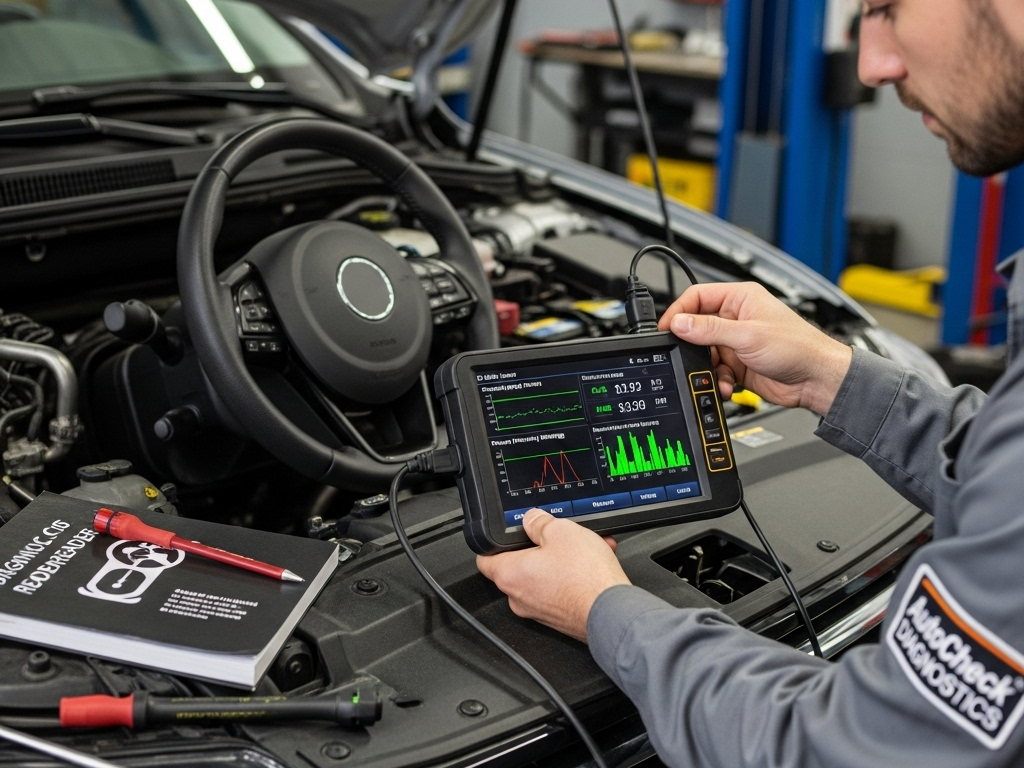
How does focusing on tpms sensor frequency europe north america lower returns of incompatible sensors?

Beginning
Complete growing sophistication inside up-to-date machines obliges a thorough knowledge of diagnostic tools, specifically pertaining to On-Board Diagnostics II (OBD2) and Tire Pressure Monitoring Modules (TPMS). Through Europe, Asia, and the US, these advancements apply using discrete frequencies. OBD2 norms are largely synchronized globally, essentially utilizing ISO 9141-50, KWP2000, CAN, and others, but regional integrations can result in minor nuances. TPMS, however, is where major frequency fluctuations develop. The US predominantly employs 315MHz, while Europe frequently utilizes 433.92MHz, and Asia manifests a more multifaceted range including both frequencies and further bands. As a result, faultless diagnostic instruments must be provided with the potential to decode these diverse frequencies to promote effective maintenance and maintenance.
Unpacking TPMS Sensor Frequencies: A Global Guide (Europe, North America, Asia)
Knowing tire pressure monitoring tool (TPMS) gauge spectra in the globe can be tough. Commonly, North regions mostly utilize 315 MHz, despite some latest vehicles apply 433 MHz. However, Europe and most of Asia predominantly act on the 433 MHz channel, with some local variations emerging chiefly in select Asian countries. As such, essential to confirm the precise waveband before buying into TPMS receivers to guarantee accordance and skip potential snags.
Electric Car Diagnosticians: OBD2 Compatibility and TPMS Integration
State-of-the-art energy-based ride readers are increasingly integrating crucial functionality, concerning with respect to both common On-Board Diagnostics II (OBD2) compliance and Tire Pressure Monitoring System (TPMS) connectivity. A lot of zero-emission transport units utilize OBD2 ports for obtaining important system records, facilitating technicians and possessors to recognize anticipated faults. Furthermore, flawless TPMS connection provides faithful tire pressure measurements, advancing to better well-being and fuel effectiveness. This collaboration of OBD2 connectivity and TPMS operability symbolizes a important breakthrough in electric automobile inspection.
Tire Monitoring Frequency Discrepancies: Western Europe vs. North American Zone vs. Asia-Pacific - A Elaborate Study
Various technologies responsible for sensing tire force—TPMS—operate on distinct radio wavelengths, leading to considerable regional discrepancies. The United States predominantly utilizes 315 MHz, though some fresh vehicles are changing to 433 MHz. European Region mandates 433.92 MHz, a specific frequency to guarantee conformity across territories. Asian Region exhibits a varied landscape, with certain countries using 315 MHz, others 433 MHz, and still varied regions employing a conglomerate of both. This dissimilarity results in challenges for service points and motorists when dealing with replacement TPMS modules or diagnostic devices, calling for careful validation of regional standards to escape troubles and warrant proper efficiency of the TPMS.
Vehicle Scanners for EV Vehicles: TPMS Analysis & Frequency Decoding
Up-to-date ride investigators are constantly increasing to assist energy-based machines, especially involving tire surveillance assessment. Unlike petrol-driven automobiles, electric vehicles present specific challenges when it comes to tire pressure system diagnostics. Many zero-emission vehicles use distinct tire data devices wavelengths requiring the tool to accurately understand the channel in use. This ability allows service personnel to purely display tire pressure but also detect the definite radio signal being radiated by the sensor array devices, aiding in sound assessment of faults.
Asia TPMS Spectrum: What Need Learn?
Decoding the world of transport TPMS can be a difficulty, primarily due to the varying frequencies utilized across European Region, Asia, and the United States. Western European vehicles predominantly use 433.92 MHz, while several Asian countries employ 315 MHz and 433.92 MHz, creating a tangled situation for experts. In the US, both 315 MHz and 433.92 MHz are ordinary, with 315 MHz being more substantial. Therefore, understanding these regional discrepancies is vital for accurately fixing TPMS problems and selecting the fitting programming tools.
Past that Fundamentals: Motor Vehicle Scanning, Battery-Powered Transport Vehicles, plus Wheel Pressure System Device Broadcast Identification
Concerning competent car professionals, simply comprehending certain fundamentals pertaining to OBD2, battery-powered ride systems, plus wheel pressure monitoring sensor signal deciphering amounts to an key advanced step. Such fields penetrate inside standard methods, entailing tailored tools plus experience so as to rightly spot or repair complicated complications associated with auto wheel management, battery architecture efficiency, plus motor failure notifications. In addition, efficiently spotting pressure detection sensor frequencies – which vary among diverse creators together with designs – frequently indispensable to effective pairing.
Electric Auto Inspection: Using OBD2 Scanners to Troubleshoot TPMS
Fixing Tire Pressure Monitoring Systems tire monitoring in electric vehicles battery vehicles often involves more than simply visual inspection. Modern OBD2 scanners offer a ability to extract TPMS data and discover potential glitches. Utilizing these apparatuses, technicians can view fault codes, examine sensor status, and even apply sensor examinations, allowing for reliable diagnosis of system glitches and minimizing maintenance delays. The is especially valuable given the ballooning complexity of EV networks.
Handling TPMS Transmissions: A Comprehensive Explanation for Europe, Asian Continent, and North American Zone
Reliably operating tire monitoring sensors amongst the EU, Asian Subcontinent, and American Continent necessitates a sufficient familiarity of the different spectrum allocations they apply. Distinct from a even system, the globe often abides by specific frequency ranges. To illustrate the Continent essentially uses hundreds fifteen MHz and 433.92 MHz band, while the US & Canada often employs three-one-five electric vehicle scanner MHz although certain latest vehicles might contain 433.92 MHz. Asia-Pacific exhibits a more fragmented context, with multiple ranges engaged, reliant on the state and vehicle manufacturer.
- Check territory restrictions regarding tire sensor signal.
- Look up your vehicle directory for exact signal.
- Apply a gauge reader capable of reading diverse signals.