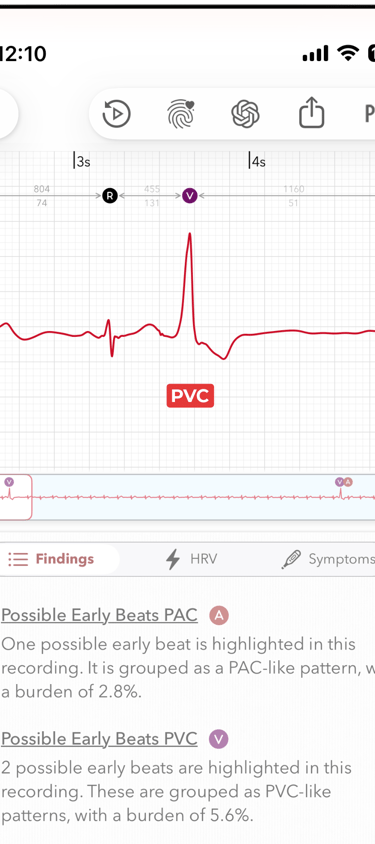
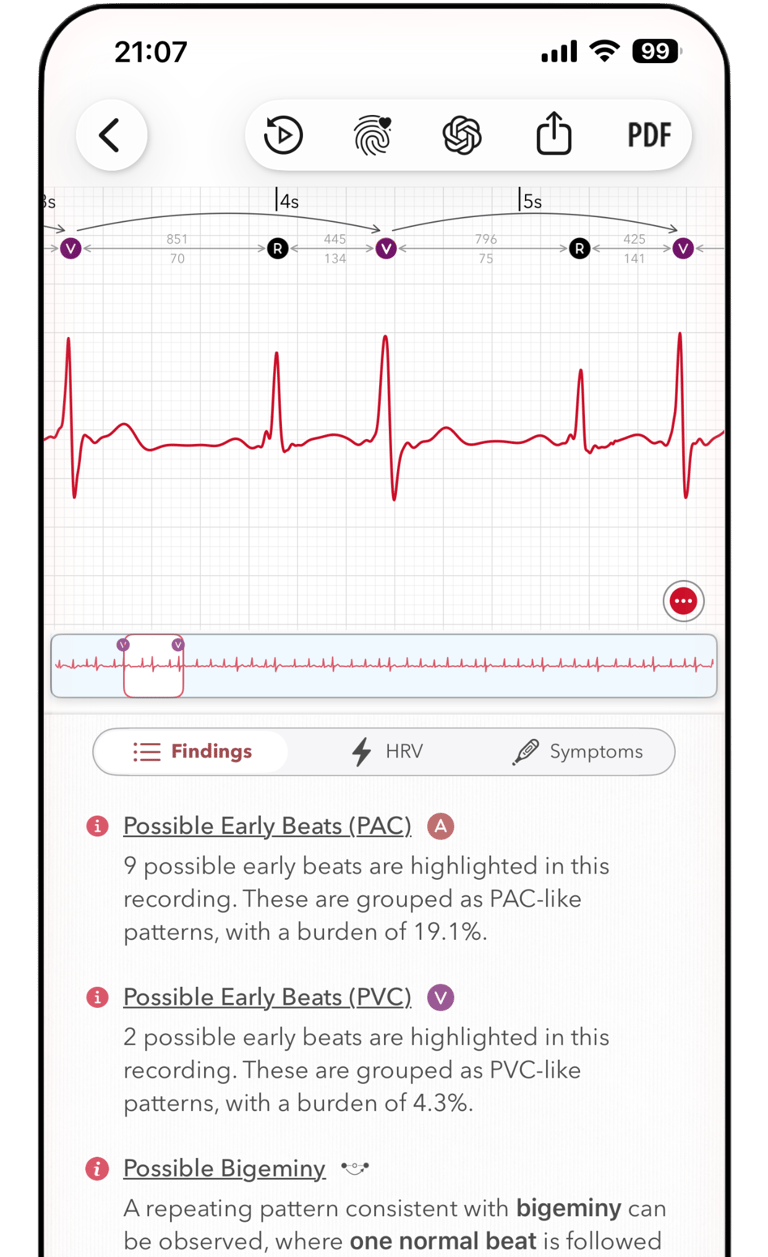
How can PAC ECG tracking help cardiologists fine‑tune treatment for arrhythmia patients?
Warm regards
AElectronic Watch’s Heart Activity attribute has transformed how countless users observe their heart health. This summary delves into the system of the ECG application on the Smartwatch, detailing how it executes and what type of knowledge it can provide. We’ll examine the basics of pulse diagnostics, possible weaknesses, and important elements to safeguard in consideration before leaning the results. Ultimately, this document aims to guide you to comprehend your pulse’s rhythm with the help of your Wearable
Understanding ECG+ using Your Smartwatch
Your Device supplies a remarkable option, the ECG+ tool, providing you to obtain an electrocardiogram promptly from your wrist. This instrument isn't a replacement for regular medical assessments, but it supplies valuable findings about your heart rhythm. The ECG+ app identifies atrial fibrillation (AFib), a variety of irregular heartbeat, and can demonstrate other heart abnormalities. To utilize it, ensure your watch and iPhone are enabled. You’ll must watchOS 7.5 or most recent and iOS 14 or latest on your iPhone. The process necessitates placing your fingers on the Digital Crown and a area below it, letting the watch conclude the reading. Results are archived in the Health app and can be communicated with your specialist.
- Authenticate proper watch positioning.
- Follow on-screen instructions.
- Talk to results with a health professional.
Apple Watch Heart Scan: How Does It Operate
This Wearable’s ECG sensor applies a smart approach to observe your pulse’s electrical potentials. It activates by engaging electrical transmitters located within the control knob and the loop. When you initiate an ECG evaluation, these modules send slight electrical signals through your limb, which later identify the electrical configurations of your heart rhythms. These reports are interpreted by sophisticated software within the watch to assemble an ECG overview, which can then be observed within the medical software on your portable gadget. Pertaining to accuracy, while the Apple Watch ECG function can provide valuable discoveries, it is not classified as a backup for a standard ECG conducted by a medical physician. Examinations have shown mixed levels of correlation with professional ECGs, highlighting the requirement for review by a medical expert and it should be used as a resource for surveillance purposes, not for precise validation of cardiopulmonary conditions.
Clarifying the the Watch ECG Software
This particular this device's ECG function can seem challenging, but grasping how it acts is relatively simple. It’s important to take into account that this system isn't formulated to serve as an alternative to a physician's evaluation; instead, it presents a glimpse of your pulse’s electrical signal. Essentially, the watch utilizes electrodes built into the crown and sensor to detect the vascular signals. The analysis can uncover potential problems like atrial instability, which required supplementary medical attention.
- It's a introductory method.
- Always talk to a expert.
- Familiarize yourself with the deficiencies.
Heart Scan on Apple Watch: Knowing Your Vascular Readings
The Apple Watch's ECG component offers a significant glimpse into your cardiovascular tempo. But, it's vital to note that these readings aren't a equivalent for a experienced diagnosis. An ECG can detect issues like atrial fibrillation (AFib), which is a state where your vascular beats unpredictably. Additional findings could include standard cardiac rhythm, or anomalous patterns that require extended investigation by a professional authority. Always share your ECG recordings with your medical professional for valid assessment and adapted suggestions.
Are Your Wearable Watch Heart Rhythm Giving Valid Results?
The developing Apple Watch ECG feature presents a tempting glimpse into your cardiac health, but the concern lingers: do they truly giving accurate results? While the Apple Watch ECG is validated by the FDA, it's critical to acknowledge it's not a surrogate pac on ecg for a professional hospital evaluation. It’s designed to monitor potential atrial fibrillation, which may indicate a need for further investigation, but false alarms and false misses are conceivable. Several things, including proper positioning of the watch and body contact, matter in obtaining meaningful results. Consider consulting with your doctor regarding your ECG results and never self-diagnose the Apple Watch's assessment.
- Authenticate proper watch wearing.
- Exchange results with your clinical team.
- Steer clear of self-treating based on ECG measurements.
Apple Watch ECG & ECG+: Attributes and Upsides Reviewed
This Apple Watch offers certain leader ECG and ECG+ application, granting users to capture a electrocardiogram immediately from their wrist. The foundational ECG tool can spot signs of cardiac arrhythmias, the potentially significant heart disease. ECG+ enhances upon this, providing a augmented 30-second recording duration and further analysis geared on revealing port-side heart appendages, wherein could be relevant for specific patients with selected profile of unexplained brain insult. These facilities symbolize a considerable leap in portable physiological surveillance platforms, probably enabling for preliminary support and refined user outcomes.
Correcting Common Errors with the Apple Watch ECG
If a user’s Apple Watch ECG function isn't behaving appropriately, diverse probable grounds for exist and are capable of being easily managed. To begin, validate that watch and your iPhone are patched with the latest software. In the next step, test turning off and on both gadgets; a straightforward reboot often clears modest glitches. Moreover, scrutinize the ECG features in the Health program to prove the necessary parameters stand as defined accurately. Ultimately, if a user is still having problems, connect to Apple Care for additional support.
Exceeding the Basics: Detailed Apple Watch ECG Review
While the Apple Watch’s ECG component offers a remarkable tool for recognizing potential atrial fibrillation, examining surpassing the initial assessment unlocks a universe of intricate capabilities. Careful observation of the complete waveform, including details like P wave configuration, PR length, and QRS pattern, obliges a deeper grasp of cardiac mechanics. Furthermore, reviewing trends over length and linking ECG reports with case’s symptoms can provide crucial insights for additional clinical analysis, even though it's important to keep in mind that the Apple Watch ECG is will never be a proxy for a experienced cardiac study.
Take care