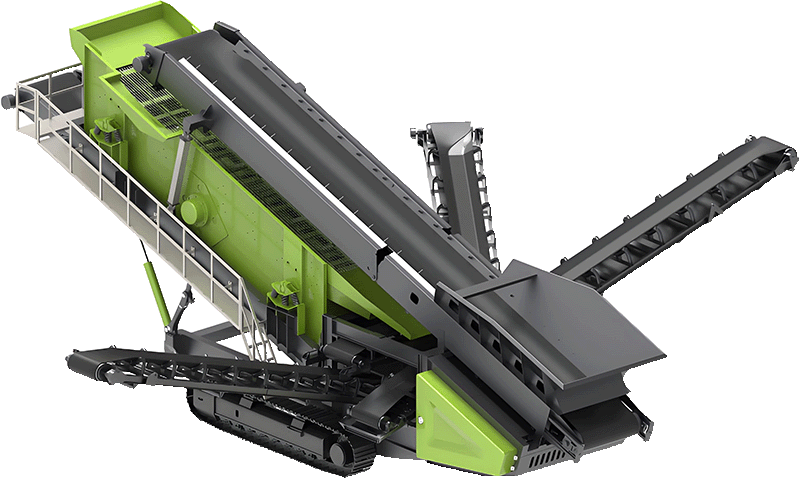
commercially proven reliability focused industrial refuse cutting units?
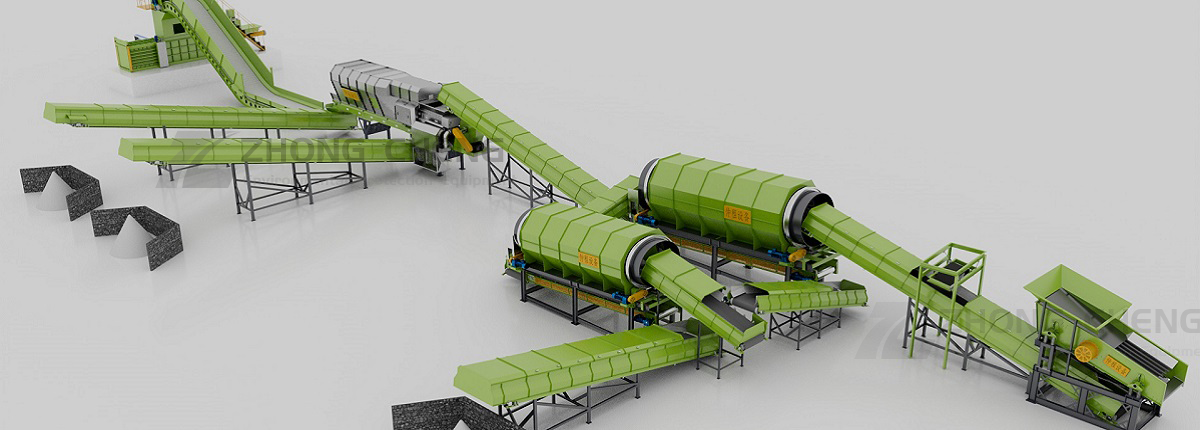
Beginning
Revolutionary momentum-based distinguishers furnish a impressive approach for trash segregation. Particular trailblazing instruments leverage the law of inertia to sort various constituents based on their physical traits. By launching waste at high speeds, momentum-based partitioners can effectively segregate renewable products from biotic discard and foreign substances, thereby optimizing the overall efficiency of the renewal cycle.
- Besides, kinetic distinguishers can deal with a broad array of waste materials, allowing them to serve as multifunctional for use in numerous manufacturing and community facilities.
- As a result, the insertion of cutting-edge propulsive classifiers can noticeably reduce the eco-damage of residual handling.
Optimizing Material Recovery: The Role of Ballistic Separator Technology
Across the progressively changing domain of refuse handling, enhancing material retrieval stands as a vital target. Centrifugal sorters are revolutionary solutions here, employing spinning force to sharply separate items based on mass and configuration. These mechanisms persistently secure prominent salvage yields for indispensable recyclable materials including thermoplastics, nonferrous metals, and clear minerals. By streamlining the separation process, ballistic separators reduce labor costs, optimize processing efficiency, and ultimately contribute to a more sustainable waste management system.
Industrial Recycling for Environmental Conservation
The fragmentation of metals holds vital importance in the reclaimation and materials re-use industry. This approach applies heavy-duty devices to break ferrous parts into segments, assisting in ongoing recycling and innovative product development. The employed techniques guarantee distinct separation of metallic substances, encouraging fabrication of quality recycled materials deployable in infrastructural, industrial, motorized, and electronic applications. Therefore, pulverizing ferrous materials greatly advances eco-friendly industrial operations by lowering new resource consumption and lessening ecological damage.
Force-Driven Sorting: A Significant Factor in State-of-the-Art Reprocessing
Throughout progressive reprocessing systems, centrifugal classification functions as a key practice. Such intricate technology harnesses natural laws to efficiently separate materials per amplitude, build, and heaviness. Utilizing controlled wind patterns or diverse mediums, salvageable elements are transported into assigned gathering units, accelerating waste management. This rationalized sorting approach minimizes manual intervention, heightening entire functionality and yield in innovative recycling hubs.
Advanced Waste Partitioning Apparatus Based on Centrifugal Force
Throughout the contemporary ecological context, the importance of proficient scrap sorting options is high. An innovative answer involves deploying top-tier sorting equipment harnessing kinetic classification technology. This practice uses blow energy to allocate heterogeneous rubbish parts by size, figure, and weightiness. These units deliver swift and exact classification of scrap streams, decreasing landfill accumulation and boosting recovery initiatives
- Pros of using ballistic separation in waste sorting machines include:
- Enhanced productivity rates
- Increased exactness
- Decreased staffing needs
- Improved eco-friendliness
Modernizing Garbage Processing Using Dynamic Sorters
Residue control creates notable issues for towns on a global scale. Typically, junk partitioning involved human hands, a tedious procedure. On the other hand, fresh inventions are evolving junk administration. Amidst these, centrifugal sorters prevail as robust breakthroughs. Ballistic separators utilize physics to accelerate waste materials at high speeds, effectively separating them by density. This automated process significantly improves the efficiency and accuracy of waste separation, reducing labor costs and environmental impact
- Positive aspects of Ballistic Separators:
- Higher output
- Lessened labor charges
- Finer differentiation capability
- Minimal environmental impact
Refashioning Waste into Materials: Breaking Down and Separating with Precision
industrial waste shreddersIn a future emphasizing eco-friendly actions, reprocessing junk into resources is critical. Crushing and categorizing functions are fundamental, assisting exploitation of concealed worth in left-over objects. With detailed categorization, assorted elements like synthetic resins, ferrous compounds, fiberboard, become separable, fostering reprocessing and reclamation. This meticulous approach not only reduces our environmental impact but also fosters a circular economy where waste is viewed as a valuable resource
Increasing Recycling Rates: The Impact of Material Shredders
Breaking systems perform key duties in boosting reuse percentages by shrinking recyclable components. Such action supports streamlined organization and handling, resulting in increased reclaimed product throughput. Furthermore, milled constituents fill reduced storage area, protecting key resources and easing logistical challenges
Next-Gen Waste Handling
Momentum-based separators are upgrading the function of garbage division. Such advanced devices use rapid collision energy to propel various refuse types into specified bins according to heaviness and mass. Such computerization notably elevates sorting correctness, promoting enhanced recovery rates and curtailed dumping quantities
Efficient Metal Extraction with High-Performance Shredders
Requirement for metallic matter persistently intensifies, inspiring advanced retrieval systems. Top-tier mills hold significant roles via fast division of scrap alloys into smaller, manageable units. Such procedure promotes successive transformation and recovery of worthy elements, controlling biosphere impact of metal development. Refined mill models, presenting rugged manufacturing and deft cutting components, empower factories to elevate recovery volumes with less waste
The Recycling Revolution: Innovations in Waste Management
The anticipated future of reuse accelerates thanks to cutting-edge progress. Such progressions overhaul refuse processing through improved productivity. From smart machines capable of distinguishing and grouping salvageable materials exactly to complex sensor grids observing trash metrics instantly, these methods open paths to eco-friendly futures
- Digitized sorting centers
- Sustainable compounds
- Bio-energy processes
By embracing these technological innovations, we can effectively manage waste and create a more sustainable future.