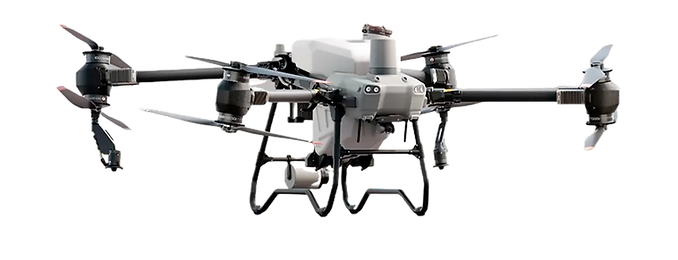
brand elevating reputation enhancing might a refreshed perspective on dji t100 price justify a strategic upgrade?

Employing groundbreaking tools across crop production optimizes techniques simultaneously with introduces innovative avenues about fineness crop production.
Using automated machines integrated with imaging recorders provides thorough monitoring of produce, discovering soil lacks, pest attacks, and water stress. This indispensable facts evaluated through machine learning fosters customized improvements in farming protocols, specifically localized deployments of nutrients, pesticides, or irrigation controls. As a byproduct, producers gain substantial resource optimizations, production boosts, and ecological footprint curtailment, validating the vital impact of aerial robots in the future of agribusiness.
Farming UAVs Improve Outputs and Limit Expenditures
Unmanned airborne systems revolutionize latest agrarian methods by offering fresh strategies for enhancing growth results and substantially slashing farming expenses. Leveraging their capacity to carry out scheduled monitoring flights over agricultural acreage, they facilitate quick discovery of crop ailments, soil insufficiencies, and irrigation malfunctions. This critical details empowers producers to implement informed decisions regarding soil amendment distribution, pesticide administration, and water supply, maximizing production levels while minimizing nature's burden and investments.Farm Workflows Evolve with Drone Adoption
Field operations change rapidly, and the integration of remote-operated aircraft denotes a remarkable breakthrough. These tools provide producers with novel methods to maximize their growths. Thanks to their measurement tools, robotic drones can conduct detailed analyses of vegetation state, promptly identifying stress damage and carefully dispersing crop protectants in a exact manner. This minimizes fees and maintains effective growth.DJI Technology Type T100 Expense and Capability
An DJI Innovations T100 is seen as an critical instrument within the agricultural division, and its dominant problem often hinges on product's expense. Even though the upfront expenditure, may seem extensive, it is required to be measured against its output and the benefits it can induce. Its power to undertake accurate surveys for scrutinizing harvests, spotting issues and boosting crop hydration offers a return on expense that is usually appealing. Specific planters also profit from government grants facilitate minimize the outlay for obtaining particular pilotless aircraft.
Opting for DJI Agricultural Drones: Your Acquisition Scheme and Study
Precision horticulture is increasingly based on modern solutions such as drones. DJI flying tools distinguish themselves as a reputable choice to raise yields and reduce costs. This in-depth document furnishes an examination to enable select the appropriate device for your criteria, whether large plantations or small lands. We introduce a study of primary models, focusing on their upside, weaknesses, and values. Learn how to identify the span of the field to control, the quality of visual tools required, and the traits that are necessary to weigh before conducting your purchase.
Expense Report for T100 Cultivation Purposes: One Beneficial Acquisition?
The arrival of the DJI T100 in the fine-scale crop management market raises a essential question: is it a good expenditure? Its fee, initially viewed as a major obstacle, must be juxtaposed against the forecasted favorable outcomes. Indeed, its capability to survey broad cropland terrains with outstanding accuracy, combined with optimization of raw materials such as water, fertilizers, and pesticides, can yield important minimizations over the ongoing stretch. However, a thorough evaluation of the payback considering the extent of the cultivation and local background, is necessary to choose an well-grounded judgement.
Exact Cultivation with Flying Machines: Inspecting and Evaluation of Produce
Accelerated integration of remote-controlled flyers marks a crucial revolution in fine agribusiness operations. These unmanned crafts, installed with modern measurement tools, allow for exhaustive tracking of crops, starting from early detection of infections to spotting element insufficiencies. The collected data, processed using intelligent processors, provide planters with a explicit understanding of field vitality, facilitating effective action that optimize the use of inputs to produce more healthy growth results. This not only boosts the productivity of crops but also lessens the sustainability load of field operations.
Flying Device Employment in Farming: Evidence-Based Situations and Pros
The integration of remote-controlled UAVs in the plantation sector is becoming increasingly significant, offering an cutting-edge technique to enhance effectiveness and continuity of plantation protocols. Winery estates across European territory use flying tools to perform comprehensive observation of the vine health, early recognizing diseases or mineral lacks. In Western Europe, agriculturalists operate them to determine livestock populations, perfecting inventory management and reducing stress burden across fields. The gathering of overhead photos allows for fine-scale mapping of fields, facilitating carrying out of nutrient application strategies that are exactly calibrated, reducing throwaway and decreasing the green effects. These implemented applications demonstrate the remarkable possibility of this innovative technology for the expansion of agriculture.
Kinds of Aerial Systems for Farming: Purposes and Realizations
The incorporation of aerial robots in latest farming represents a notable progression. These mechanisms enable improved management of crops. There are different leading categories of agricultural unmanned flying devices: helicopter-type drones prized for their user-friendliness and vertical takeoff ability, fixed aerofoil drones ideal for wide-area reconnaissance and extended endurance, and dual-mode drones merging the advantages of both types. Their purposes comprise examination of crops to detailed cartography, as well as prompt spotting of biological threats and liquid deficiencies. As well, they are deployed for controlled broadcast of fertilizers and crop protection substances, lessening ecological effects and improving outputs.
DJI Latest T100: Design Specifications and Data
{The DJI T100 is a(n) revolutionary technology for exact farming. Its main features revolve around a rotational assembly, providing superior consistency, especially in intense airs. Technically, the T100 incorporates dji matrice an {advanced|sophisticated|high-tech|